Category: Structured Products

  • Capmatix Update Version 24

    Capmatix Update Version 24


    We’re excited to introduce the new features in Capmatix v24 designed with our regular users in mind and crafted to enhance operational efficiency.

    Here’s what’s new – and why it matters for you:

    Enhanced Monitoring: Gain greater transparency into system activity. Our new monitoring solution offers real-time dashboards that simplify oversight of key process steps—helping you track performance and identify potential improvements at a glance.

    Optimised Document Generation: We’ve further increased document production speeds, with improved capabilities to support even higher throughput. This is especially beneficial for customers handling large volumes of documents, such as overnight batch processes.

    Easier Content Management: The latest version of our DocDesigner makes updating and managing content more seamless than ever. With the introduction of QuickDocTester and other intuitive features, you’ll find your workflow smoother and more efficient.

    Ready to explore how Capmatix can support your needs? Reach out to hello@l-p-a.com to learn more.

  • Harnessing GenAI: LPA’s Journey to Empower Employees with Capmatix TranslAIte

    Harnessing GenAI: LPA’s Journey to Empower Employees with Capmatix TranslAIte

    The Capmatix TranslAIte (CTAI) project was launched in the first quarter of 2024. Originally it was intended to support the translation of regulatory documents, but other internal use cases for the tool have emerged such as the optimization of emails. The tool enables LPA employees to use Chat GPT 4 Turbo customized to the LPA context. Users can choose from various use cases, for example translating text modules for PRIIPs KID cases, composing professional emails, or summarizing texts and generating the corresponding output.

    Development

    Over the course of approximately 60 days and across three sprints, a Scrum-organized team consisting of three developers with specialties in areas such as architecture, backend, GUI and DevOps, a product manager and a product owner developed an internal tool for LPA. The Capmatix TranslAIte tool has been set up in a dedicated internal Azure environment. Additionally, various authentication options for users were explored, and ultimately EntraID was implemented. There are two categories of users: the regular LPA end user and the administrator, who performs additional CRUD operations and takes care of user management. During that time, our development and product team has gained valuable insights and experience in dealing with artificial intelligence and its integration into projects.

    Prompt-engineering and rating of translation

    A significant part of the project was the development of prompts. In particular, the use of AI for translations posed challenges: prompts require a precise and comprehensive context for the translation, but there is also the question of how to evaluate an output. The common prompt techniques were considered as a starting point for our investigations (see details on page 10). To address the question of translation quality in the context of PRIIPs KIDs we investigated multiple measuring methods. Usually, the quality of translations is assessed by comparing the machine-generated text with a human “correct” translation. There are various methods with specific characteristics, such as the ROUGE method (Recall-Oriented Understudy for Gisting Evaluation), which compares matches between machine and human translation using synonyms and overlaps of whole units or phrases. The BLEU score (Bilingual Evaluation Understudy), on the other hand, evaluates exact matches. Since many text phrases and sections in KID texts are strictly defined by the European Banking Authority, the focus was placed on the BLEU score to assess the quality of the prompts (see below). To summarize, it was found that the balancing act between necessary precise translations (e.g., in the section “Purpose”) and text with free wording, context-sensitive translations (e.g., section “What is the product”) cannot be represented using a single prompt. Several prompts per section lead to better results but limit the usability and value of the application. The phenom enon of hallucinations, known from GPT, posed an additional difficulty, particularly for precise translations.

    Further usability improvements

    The additional features of the tool include user- friendly functions, such as the ability to copy and paste both the input and the output, as well as the option to rate the output. The entire feedback is regularly evaluated by the Structured Products product team to derive further action strategies and improvements on our prompts.

    Summary and outlook

    LPA has acquired considerable experience in the field of artificial intelligence (AI) within a remarkably short period of time and offers all our employees an easy way to access GPT-4. We are now utilizing this knowledge to advance the development and deployment of custom-tailored AI models to further improve the quality of the translation results. We also expect that the new models will help in improving our Support capabilities as they are trained in existing user manuals for the various LPA Software products.

  • Towards Inclusive Banking: Implementing the EU Accessibility Act in Digital Banking Services

    Towards Inclusive Banking: Implementing the EU Accessibility Act in Digital Banking Services

    On June 28, 2025 comes into force the EU Accessibility Act. The aim of the EU Accessibility Act is to ensure that people with disabilities have better access to the key products and services across the EU member states, including consumer banking services. For banks it means that all their client-oriented services should comply with the guidelines listed in the EAA, and this article will walk you through requirements to make your bank services digitally accessible. What is the EU Accessibility Act? The European Accessibility Act is a directive of the European Union which took effect in April 2019 and must be implemented on the national level by the EU member states until June 28, 2025. The purpose of the upcoming regulation is to strengthen the rights of people with disabilities to participate in the community with others and to harmonise the EU market by removing and preventing barriers to the free movement of certain accessible products and services. The EU Accessibility Act covers a wide range of products and services, incl. e-commerce, public transportation, ATMs, audio-visual services, computer hardware systems, operating systems, consumer banking, etc., requiring them to comply with certain accessibility standards. What are the requirements of the EU Accessibility Act for consumer banking services? The EU Accessibility Act does not aim at imposing detailed technical compliance requirements, but rather at providing a set of general accessibility requirements for certain products and services. In addition, the regulation avoids imposing burdensome requirements on small companies as it is not applied to businesses with less than 10 employees and an annual turnover of less than two million euros. When it comes to consumer banking services, the EAA states that providers of services covered by the regulation must ensure that their services are accessible to people without/with limited vision, without perception of colour, without/with limited hearing, without vocal capability, with limited manipulation or strength, with limited reach, with limited cognition, and with photosensitivity. Providing services for maximum accessibility to people with disabilities includes giving information on service operation, product usage, accessibility features, and compatibility with assistive devices. This includes:

    EU Accessibility Act Requirements

    • providing information in multiple sensory channels
    • supplementing non-textual content with alternatives
    • ensuring information is understandable and perceivable
    • making electronic information consistent and adequate for accessibility
    • offering text formats for alternative assistive formats
    • ensuring websites and mobile services are consistently accessible
    • using suitable fonts, sizes, and contrast making information understandable

    Additionally, it involves making websites, including the related online applications, and mobile device-based services, including mobile applications, accessible in a consistent and adequate way by making them perceivable, operable, understandable, and robust. Furthermore, where available, support services (help desks, call centres, technical support, relay services, and training services) providing information on the accessibility of the service and its compatibility with assistive technologies, in accessible modes of communication. Consumer banking services should additionally ensure providing identification methods, electronic signatures, security, and payment services which are perceivable, operable, understandable and robust; and ensuring that the information is understandable, without exceeding a level of complexity superior to level B2 (upper intermediate) of the Council of Europe’s Common European Framework of Reference for Languages. Nevertheless, the EU Accessibility Act will not apply to time-based media and file formats of Office applications published before 28 June 2025, and to content of websites and mobile applications that are considered archives and whose content is archived and will not be updated or revised after 25 June 2025. Unfortunately, there is no information whether it is also applicable to PDF files in the EU Accessibility Act. The full list of general requirements can be found in Annex of the EU Accessibility Act, alongside with the examples of possible solutions that contribute to meeting the accessibility requirements in Annex 2. How can banks ensure digital accessibility for their consumers in line with the EU Accessibility Act requirements? As it has been mentioned earlier, the EU Accessibility Act does not give information on “How” to comply with the regulation, in other words, it does not provide any functional or any detailed technical solutions, which bring a challenge for banks. However, there are existing guidelines for digital accessibility which can be used as a reference. For example, many pieces of the EU Accessibility Act take inspiration from the Web Content Accessibility Guidelines (WCAG), and while the EU Accessibility Act does not name WCAG as a standard, its accessibility requirements for digital products are based on the same accessibility principles. Therefore, when it comes to digital accessibility, complying with WCAG is a potential solution to complying with the EU Accessibility Act.

    How can Capmatix facilitate accessibility of your banking services?

    Choosing Capmatix, a cutting-edge automation and regulatory compliance software solution for financial institutions, ensures your full compliance with the EU Accessibility Act across all digital content. From documents and reports to marketing materials, websites, and digital client advisories, we guarantee accessibility alignment with the upcoming EU Accessibility Act. With a proven track record, our regulatory expertise ensures 100% compliance with diverse regulations for more than 200 of our clients. Our document automation proficiency enables the seamless generation of thousands of documents, while our technical expertise empowers us to create and connect various digital content formats across all platforms and infrastructures. Moreover, our LPA Consulting division specializes in understanding your unique requirements and provide bespoke advice tailored to your organization, ensuring seamless compliance with the EU Accessibility Act. Contact us today to learn more about how LPA can secure your digital content accessibility in preparation for the EU Accessibility Act.

  • Capmatix Structured Products User Group Meeting

    Capmatix Structured Products User Group Meeting

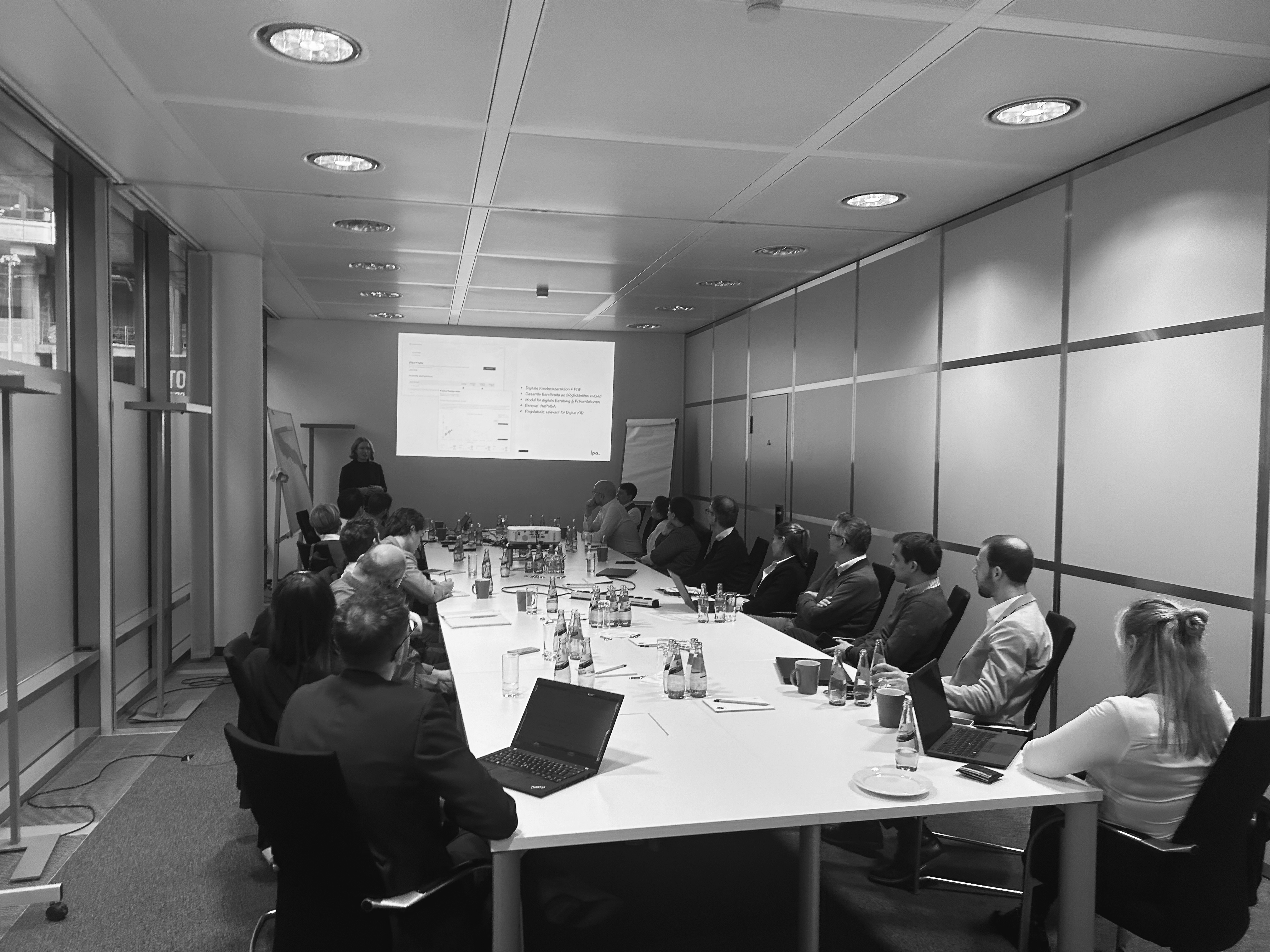
    Over the last few years, LPA has successfully onboarded and maintained installations for all sizes and types of financial institutions in Europe (Germany, Spain, UK, Switzerland, Italy, etc.). With over 350 experts, the Capmatix SP User Group is a key resource for both new and experienced clients to connect with one another, offer suggestions on best practices, and ask questions about using LPA software solutions.
    We at LPA are thrilled that our customers actively participated in our Capmatix SP session on 14th of March 2024! If you have not yet attended our User Group Meeting, we invite you to do so. You can request to join by contacting your dedicated Account Manager, or by contacting us (see contacts at the end of this report). You can also email us at hello@l-p-a.com.

    Capmatix SP Roadmap explained to our clients

    During the event, Patrick Reum, our Capmatix SP Product Manager, provided an overview of the Capmatix SP product development trajectory and new modules. Emphasis was placed on transparency, with Patrick clearly outlining Capmatix SP strengths and areas for improvement, which garnered significant interest from participants. Key takeaways included a focus on product development, with new versions scheduled for release every six months, and improved visibility of the roadmap.

    A glance at regulations

    Are you familiar with Retail Investment Strategy (RIS) and European Single Access Point (ESAP)?
    The main goals of RIS are to increase EU citizens’ long-term savings and participation in capital markets. As an “Omnibus Directive”, RIS will leadmto amendments to several directives and regulations, including MiFID II, IDD, PRIIPs, UCITS, AIFMD and Solvency. Please contact our team to learn more about the key upcoming PRIIPs amendments, including digital KIDs, sustainability sections, 4-page KID extensions and more. On the other hand, ESAP tackles the difficulties of accessing relevant information on all regulations. This information remains scattered, not machine readable and for many stakeholders still constitutes a language barrier. Different regulations and directives will be
    included in the initiative through successive phases that we would be more than happy to walk you through.

    A deep dive into KIDCalc Analytics

    KIDCalc Analytics is a new Capmatix SP module that facilitates the calculation of key figures for specific KIDs, allowing for the validation of new products directly through a web UI. Through a simple link on the screen, KIDCalc Analytics can be opened, highlighting key figures with interim results. Further calculations can be initiated with just one click, incorporating historical data for comprehensive analysis. From scenario analysis to cost evaluation, this tool provides insights into various aspects, including Value at Risk (VaR), cash flows, market value, costs, internal rate of return (IRR), and more. Additionally, it offers a sorted distribution of scenario values, enabling users to assess different paths and outcomes.

    A word on market trends

    The financial landscape is witnessing a profound transformation as established market players embark on various initiatives to position themselves within the rapidly expanding realm of digital assets. At the regulatory level, initiatives such as the DLT pilot regime and MiCaR highlight essential gaps in the regulatory framework. These initiatives aim to address the evolving needs of the market and provide a solid foundation for future development. Other initiatives may include the CBDC project from the European Central Bank, the DZ Bank pilot phase on Bitcoin Trading, the issuance of tokenized fund shares on SWIAT blockchain by Deka Investment, and more. We can imagine that with DLT integration, securities’ value chain can be streamlined, for example looking at the D7 – digital issuing platform – and Capmatix SP partnership.

    Conclusion

    The Capmatix SP User Group meeting provides a great opportunity for dialogue, collaboration, and knowledge sharing among industry peers. Feedback from participants, including representatives from Landesbank Baden-Württemberg (LBBW) and DekaBank, underscored the value of transparency and communication. We invite you to join us for future sessions as we continue to explore emerging trends, address challenges, and drive innovation in the financial sector.

  • A Beginner’s Guide to Crypto and Blockchain in Structured Products

    A Beginner’s Guide to Crypto and Blockchain in Structured Products

    In the dynamic landscape of financial markets, the transformative influence of digital assets and blockchain technology is challenging traditional norms. Despite the risks and volatility associated with cryptocurrencies, the potential for disrupting financial markets remains undeniable. The integration of cryptocurrencies has opened the opportunity for major developments in all kinds of investment products. Structured products, which were previously limited to traditional wealth management, have now found a new home in the decentralized financial space. To strategically position themselves for the future, issuers and distributors of structured products must actively build their expertise and infra- structure in the area of digital assets.

    Role of Distributed Ledger Technology in Financial Revolution

    At the core of this financial revolution lies Distributed Ledger Technology (DLT) with its two most prominent applications: blockchain and cryptocurrencies. Blockchain technology, in particular, holds the promise of revolutionizing various financial functions by offering advantages such as enhanced transparency, seamless reconciliation, security, and operational efficiency. Processes like trade execution, monitoring, settlement, and clearing would benefit from implementing blockchain through the implementation of smart contracts. This not only accelerates transaction speed but also significantly reduced operational costs by decreasing the need for intermediaries. This evolution also democratizes access, inviting a more diverse range of participants into trading.

    However, the technology is being developed and implemented at a very slow pace due to its significant challenges. These include regulatory uncertainties, vulnerabilities in smart contracts, cybersecurity threats, and a lack of standardized market practices. Given the increasing instances of hacking exploits, the instability of cryptocurrencies, an underdeveloped regulatory landscape, entrenched legacy systems in banks, and long maturing periods for certain financial products, there is a likelihood that Decentralized Finance (DeFi) will not disrupt but transition towards Traditional Finance (TradFi). This suggests a forthcoming coexistence of structured products issued in both traditional and blockchain formats.

    Decentralized Finance (DeFi) Options: A Paradigm Shift in Trading

    Unlike traditional exchanges, Decentralized Finance (DeFi) operates without restrictions for retail users trading cryptocurrency futures. This creates a unique space for innovative investment strategies that were previously unavailable on centralized platforms. DeFi options (DOVs) represent the first steps into the world of cryp- to-structured products within DeFi.

    One of the key differentiators of DeFi options is their operation without intermediaries. Traditional options trading often involves multiple intermediaries, such as brokers and clearing- houses. In contrast, DeFi options leverage smart contracts, cutting out the middlemen and allow- ing for direct peer-to-peer transactions. This not only streamlines the trading process but also enhances transparency by removing potential points of manipulation.

    Additionally, DeFi options redefine the concept of market hours by operating 24/7. Unlike traditional markets that follow specific time zones and trading hours, DeFi options leverage algorithmically updated prices, ensuring continuous trading opportunities. Moreover, the decentralized nature of these options often eliminates the need for a Know Your Customer (KYC) process, making them accessible globally to anyone with a crypto wallet. This democratization of access opens the world of options trading to a broader and more diverse range of participants. Another feature of DeFi options is their resemblance to American options in traditional finance. These options are exercisable at any time during their lifespan, providing traders with increased flexibility. This contrasts with European options, which can only be exercised at expiration. The ability to exercise options at any point adds an extra layer of strategic decision-making for traders in the DeFi space.

    The advent of DeFi options marks a significant step towards a more transparent, accessible, and flexible financial ecosystem. Operating without intermediaries, available around the clock, and with a unique exercisability feature, these options offer a paradigm shift in the world of trading. As the DeFi space continues to evolve, the allure of decentralized options trading is likely to grow, attracting both seasoned and novice traders looking for a more inclusive and innovative way to engage with financial markets.

    Blockchain and crypto in structured products

    While some banks have begun introducing blockchain technology in structured products, this initiative is still in its nascent stages. For instance, tokenized structured products have emerged as a transformative force, reshaping investment management. Notable instances include the first issuances of structured products by banks in Asia with the support of global institutions such as UBS. In Europe, traditional banks like SG and digital platforms like Taurus actively develop their infrastructure to facilitate the issuance of tokenized financial instruments in the upcoming future.

    For investors seeking exposure to crypto through structured products, several ways already exist. These include crypto structured products linked to cryptocurrencies or crypto indices, as well as actively managed certificates. While the majority of available crypto structured products are leverage products, the market is witnessing an increase in the number of issued yield enhancement and capital protection products. As the DeFi space continues to mature, navigating the world of crypto structured products requires a balance between embracing innovation and recognizing the responsibility associated with the absence of traditional safety nets. Compliance becomes a primary concern as regulatory frameworks are evolving at a slightly slower pace than technologies, creating a challenging environment for those interested into connecting structured products to crypto and blockchain.

    Navigating Regulatory Challenges in DeFi

    European Union has been developing the regulatory landscape for a new tokenised economy already for some time now. In 2024 a new Markets in Crypto-Assets Regulation (MiCAR) will come into force to regulate crypto assets. From March 2023 the DLT Pilot Regime, a regulatory sandbox, is on. Within DLT PR market participants can test DLT-based trading facilities and settlement for issuing, trading, and settling shares, bonds and funds. Currently MiFID II covers structured products linked to cryptocurrencies, but in the future it also should be applied to tokenized structured products. At LPA, we have consistently been at the fore- front of assisting financial institutions in adapt- ing to the ever-changing regulatory landscape. For companies issuing structured products linked to crypto, we play a crucial role in producing the necessary regulatory documents. As the regulation updates comes into effect, we are committed to being pioneers in navigating financial institutions through the evolving regulatory landscape. LPA’s commitment to automating regulatory compliance for banks ensures that we not only meet current needs but also anticipate and address the regulatory demands of the future.

  • EffCom AG merges with LPA

    EffCom AG merges with LPA

    About one year after the acquisition, the specialist for process automation, document management and securities solutions EffCom AG is being completely transferred as brand and legal entity to Lucht Probst Associates GmbH. Since November 2019, the long-established Baden-Württemberg company has already been operating under the umbrella of the LPA Group, but still under its own name EffCom AG. With the planned merger, both companies take into account the close cooperation of the last year and open up the possibility to intensify this even more in the future by simplifying and synchronizing bureaucratic processes. With this step, the LPA Group would also like to expressly reaffirm its commitment to the EffCom management, employees and customers.   

    Together with EffCom board member Peter Zugmantel, who will remain on board after the merger as head of the Ludwigshafen site, the LPA Group is pursuing with great intensity the goal of becoming the world’s leading developer and provider of technology-based capital market solutions and playing a decisive role in shaping the transformation of the capital markets.    

    The purely formal legal act of the merger has no impact on customers and employees. All current EffCom employees will in future be employees of Lucht Probst Associates GmbH, which will then also be the contractual partner for all EffCom AG customers. The product portfolio around innovative software solutions will also remain unchanged and will in future only trade under the name of Lucht Probst Associates GmbH.